Meme Coin Scrutiny After Trump Token Hearing
Need articles like this for your video? They help promote it on YouTube and Google — order them in the Telegram bot @sat_sit_bot. It writes articles around your video, embeds the video and publishes them on popular niche websites (no ads). Free trial — 50 articles.
Key takeaways
- Senator Al Green pressed Treasury Secretary Scott Bessent over Trump's meme coin in a congressional hearing.
- The core accusation: a sitting president profiting from a token he can influence through policy and publicity.
- Bessent's defense rests on disclosure and the idea that buyers accept the risk voluntarily.
- Critics compare the structure to a pyramid or Ponzi scheme where late buyers absorb losses.
- No federal regulator has classified presidential meme coins as securities.
A meme coin is a cryptocurrency whose value rests almost entirely on attention, branding and community hype rather than on cash flow, utility or collateral. The meme coin debate moved from crypto forums into Congress when Senator Al Green questioned Treasury Secretary Scott Bessent over President Trump's token, framing it as a conflict-of-interest and investor-protection problem rather than a technical one.
What Al Green asked Scott Bessent about the meme coin
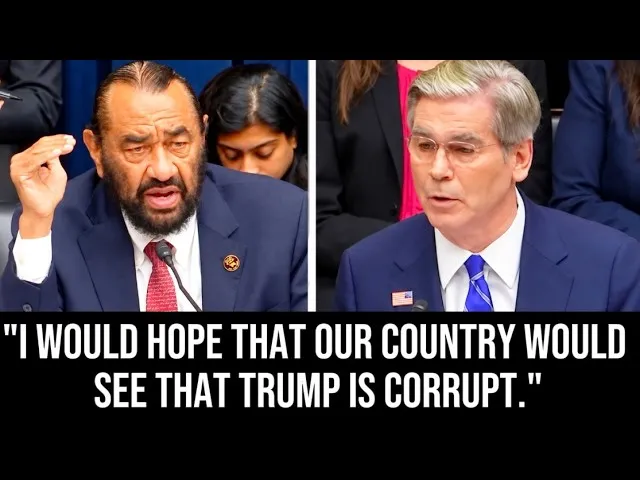
Green's line of attack was simple: a sitting president should not sell a speculative asset whose price depends on his own statements and policy. He pressed Bessent on whether the Treasury has any role in policing a token tied to the president's name, and whether buyers understand they are purchasing hype rather than an income-producing asset. Bessent's response leaned on disclosure and personal responsibility — the argument that buyers see the risk and choose to participate. Green treated that as insufficient, noting that the issuer of the asset is also the most powerful official in the country.
How presidential meme coins work and why they draw scrutiny
A token launched around a political figure typically allocates a large share of supply to insiders, releases the rest to the public at a fixed price, and relies on secondary-market demand to move the price. Three features make it a regulatory flashpoint:
- Concentrated supply. Insiders hold a large block, so public buyers are effectively buying into a market where a few wallets can sell first.
- Attention as the only fundamental. There is no revenue, no reserve and no claim on anything; price tracks news flow and social volume.
- Issuer influence. When the promoter is a public official, every announcement, tariff decision or regulatory signal can move the token — a conflict no ordinary issuer has.
Green's questioning in the hearing circled exactly this third point: the person who can shape the market is the person selling into it.
The Ponzi and pyramid labels: what they actually mean
Viewers of the exchange reached quickly for the words "Ponzi" and "pyramid," and it is worth separating them. A Ponzi scheme pays early investors with money from later ones while concealing the source of returns; a pyramid scheme recruits participants who profit mainly from bringing in new buyers. A meme coin is neither by definition — it is an openly sold, openly volatile token — but the economic pattern can rhyme: gains for early holders depend on a steady stream of later buyers paying higher prices. When that stream stops, the last buyers absorb the loss. That is why critics call it a greater-fool market, and why defenders insist the risk is visible in advance.
Why buyers still pile in despite the warnings
Motive matters more than naivety. Buyers of political tokens are often chasing three things: fast speculative upside, a sense of belonging to a movement, and — in some theories circulating online — perceived access or favor. Each motive carries a different risk. The speculative buyer can be wiped out by a single insider sale; the buyer seeking access has no contractual guarantee of anything; the buyer treating it as a collectible is paying a premium for branding that can be replicated by anyone. A secondary market listing 100 one-dollar novelty coins for several times face value, as some sellers do on classified sites, illustrates how quickly branding detaches from value.
Regulatory gaps the hearing exposed
Bessent's position reflects the current limits of US oversight. Whether a token is a security depends on how it is sold and marketed, and no agency has formally classified presidential meme coins that way. That leaves retail buyers with disclosure documents and little else. The practical questions a buyer should ask are concrete: what share of supply do insiders hold, what is the lock-up schedule, who can mint more, where does liquidity sit, and what happens to the price if the promoter stops mentioning it. None of those answers are guaranteed by a hearing, a press conference or a Treasury statement.
Practical due diligence before buying a political token
Treat any celebrity or political token as a high-risk lottery ticket sized accordingly. Check the on-chain supply distribution before buying, not after; look for wallets holding more than a few percent; read the unlock calendar; and confirm which exchanges actually provide exit liquidity. If the token's price chart is driven by speech cycles rather than adoption, position size should reflect that. The most common mistake is not buying the wrong coin — it is buying more than the loss can be absorbed.
What the exchange signals for crypto markets
The hearing matters less for what it changed than for what it normalized: congressional attention on token-level conflicts of interest. Politicians on both sides now have a template for questioning any official-linked digital asset, and that scrutiny will likely extend to tokens launched by other public figures. For traders, the takeaway is that political meme coins carry an extra layer of headline risk that ordinary crypto assets do not — the promoter can move the price with a single sentence, and regulators can move it with a single subpoena.
Conclusion
The Al Green–Bessent exchange turned a niche crypto argument into a public conflict-of-interest question, and the answer remains unresolved: disclosure and buyer responsibility versus formal restrictions on officials profiting from tokens they can influence. Daniel Reed's breakdown of the hearing captures how quickly the discussion moved from market mechanics to ethics, and why the meme coin label no longer keeps a token out of the political arena. Buyers who treat these assets as entertainment with a hard loss limit will fare better than those who mistake branding for backing.
Source: WHOA: Al Green GRILLS Bessent over Trump's meme coin “scam” · Markdown version
Questions & answers
Is a presidential meme coin a Ponzi scheme?
Not in the legal sense. A Ponzi scheme hides where returns come from and pays early investors with new money; a meme coin is sold openly and its price is public. The resemblance critics point to is structural: early holders profit only if later buyers keep paying more, and the last buyers absorb the loss when demand stops.
Why did Senator Al Green question Treasury Secretary Bessent about the token?
Green framed it as a conflict of interest: the president promotes and profits from an asset whose price reacts to his own statements and policy decisions. He pressed Bessent on whether Treasury has any oversight role and whether buyers understand the risk. Bessent's answer relied on disclosure and voluntary participation.
What should I check before buying a political or celebrity token?
Look at the supply distribution and insider wallets, the unlock schedule, who can mint additional tokens, and where real exit liquidity sits. Then size the position as money you can lose entirely, because price is driven by attention and announcements rather than revenue or reserves.
Does the US government regulate meme coins?
Only indirectly. Whether a token counts as a security depends on how it is sold and marketed, and no agency has formally classified presidential meme coins that way. In practice buyers rely on disclosures and exchange rules, which is exactly the gap the hearing highlighted.